

Integrated Robot Joint Actuators
Compact rotary joint modules available for project-specific selection in humanoids, robotic arms and mobile manipulators.
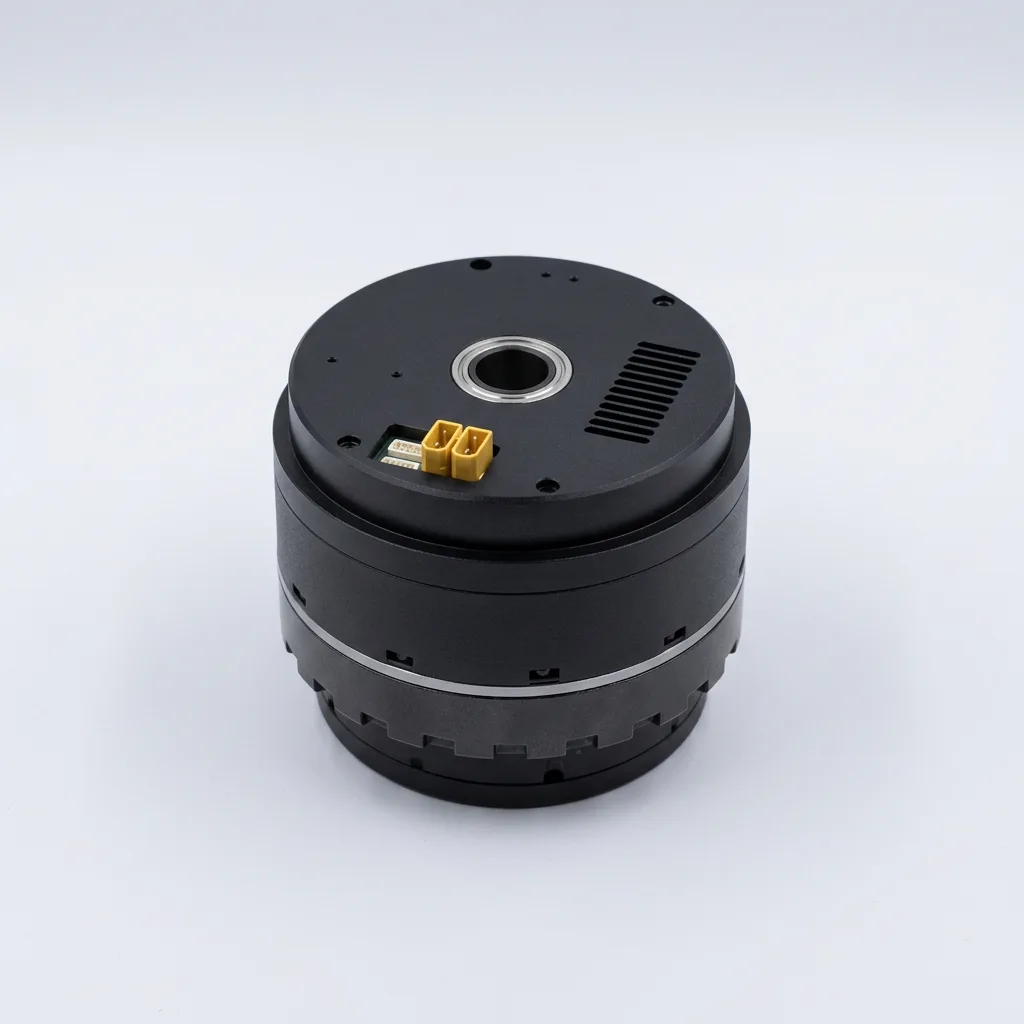
Integrated joint actuators combine several motion functions within a compact assembly. Depending on configuration, a module can combine a motor, reducer, encoder and drive electronics; confirm the actual integration level rather than assuming every cylindrical joint includes all four. Select shoulders, elbows, wrists, waist and leg joints around their different load paths and the robot architecture. Hollow-shaft arrangements can support internal routing where the selected design permits it.
Product types and configurations
Compact rotary modules
Joint assemblies for space-constrained rotary axes. Establish which bearings, feedback devices and control electronics are included, and what remains external.
Strain-wave geared joints
A motor and strain-wave transmission can share one joint assembly. Assess output loading, torsional behaviour and permitted operating conditions for the proposed configuration.
Planetary geared joints
Planetary-reduction joint configurations are considered against the required speed, torque and mechanical envelope. Their performance is configuration-specific, not interchangeable with another reducer type.
Hollow-shaft and integrated configurations
An open bore may help route cables or services. Confirm usable bore clearance, rotating interfaces and whether the motor, reducer, encoder and drive are all included.
Typical applications
- Shoulder and elbow axes in robotic arms
- Wrist and waist joints in humanoid architectures
- Hip, knee and ankle joint development
- Mobile-manipulator and custom automation axes
Technical selection
Continuous and peak output torque
State continuous torque, peak torque duration, speed and duty cycle at the joint output. Motor-side ratings cannot be substituted for geared output ratings.
Loads beyond torque
Provide radial, axial and overturning loads, arm geometry and acceleration demands. Output bearing capacity and mounting stiffness need separate assessment.
Feedback and positional requirements
Specify motor-side or output-side feedback and required resolution. Repeatability describes returning to a position; it does not establish absolute positioning accuracy.
Envelope and thermal path
Define mounting faces, bore clearance, cable exits, supply voltage and available heat dissipation. A compact housing does not establish a continuous-duty rating.
Integration considerations
Define the joint boundary
Agree included electronics, bearings and connectors, mechanical datums and the external parts needed to complete the axis. Review drawings before assembly.
Coordinate drive and feedback
Confirm the selected drive, encoder interface, power provision and host-controller requirements. Communications support must be checked for the exact configuration.
Plan commissioning and risk controls
Establish joint direction, homing, limits, tuning and cable travel. Braking, fall prevention and protective functions require a separate system-level assessment.
Image reference and scope
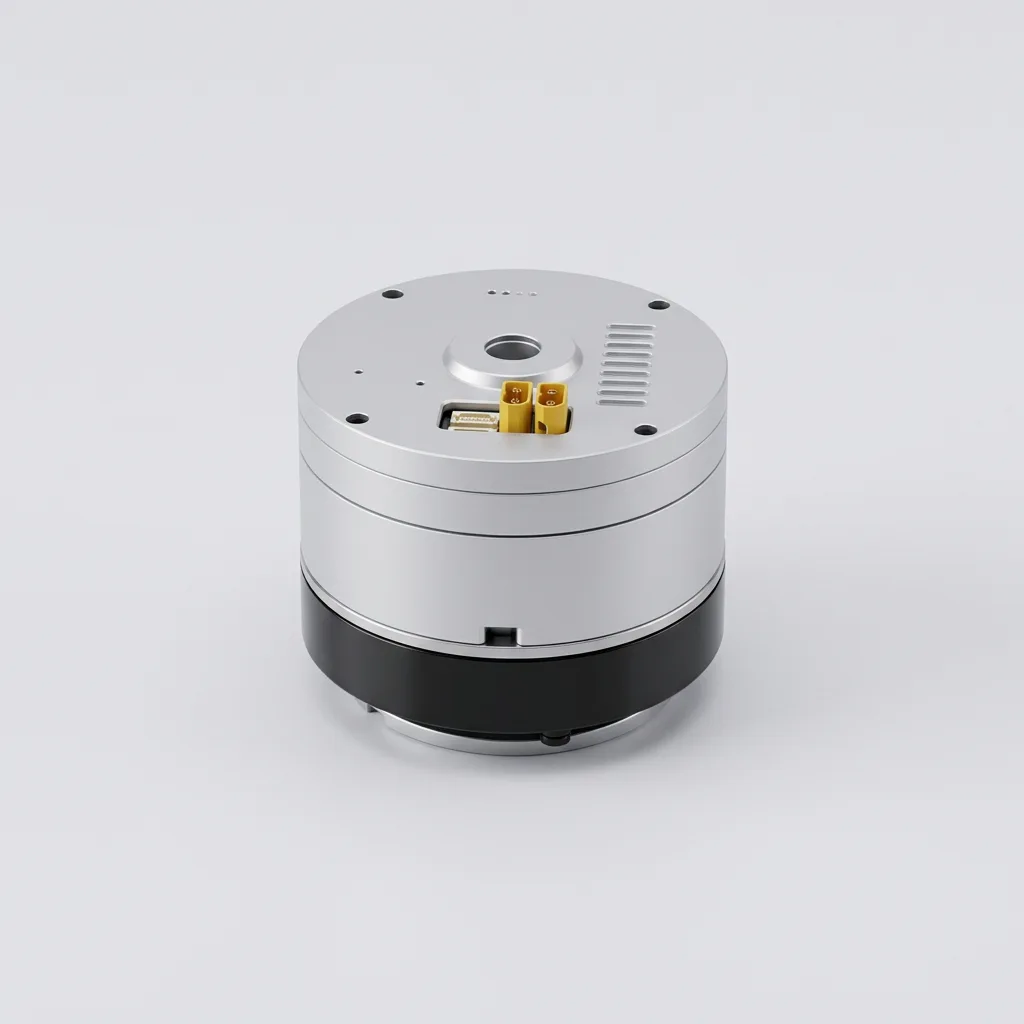
Configurations are available for project-specific selection and integration review. Ratings, interfaces, availability and documentation are confirmed for the selected configuration, not inferred from the illustrative image.
Frequently asked questions
Does every integrated joint include a drive?
No. Integration levels differ. Confirm the motor, reducer, encoder, bearings, brake and drive electronics individually against the selected assembly documentation.
Can the same module be used in a shoulder and a wrist?
Not on the basis of appearance alone. The lever arm, supported load, motion profile, mounting stiffness and packaging differ; selection must be checked for each joint.
What should an actuator enquiry include?
Describe the joint and robot architecture, continuous and peak output torque, speed, load direction, duty cycle, envelope, mounting, power, feedback, environment, quantity and project stage.
Discuss this application
Email our team with your application and component requirements.
Discuss this application