

Liquid Cooling Connections & Hoses
Dry-break couplings, blind-mate interfaces and distinct coolant-hose constructions for rack, GPU-server and CDU distribution loops.
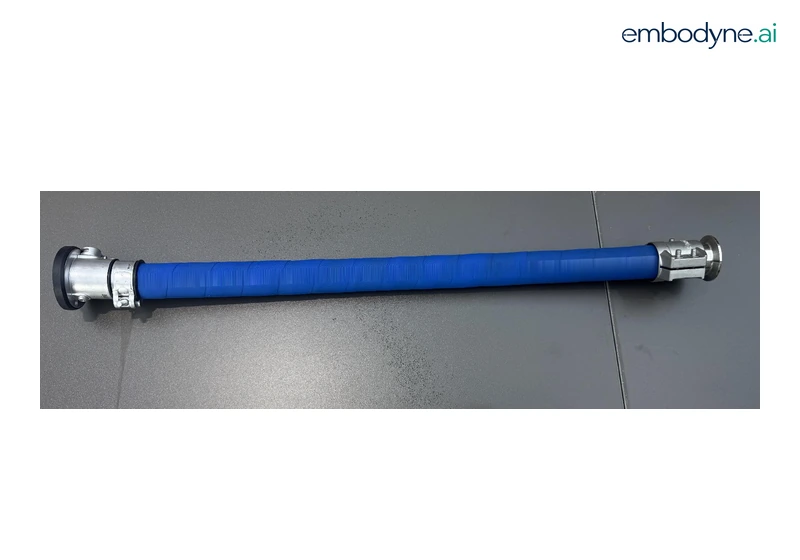
Match actuation, mating geometry, bore, pressure and hose reinforcement to the coolant route. Compare manual and blind-mate connectors, then choose a dedicated EPDM construction or a separate multipurpose hose for the intended service.
Product views
Blue EPDM hose assembly with metal end fittings
Connection and hose families
Dry-disconnect & manual couplings
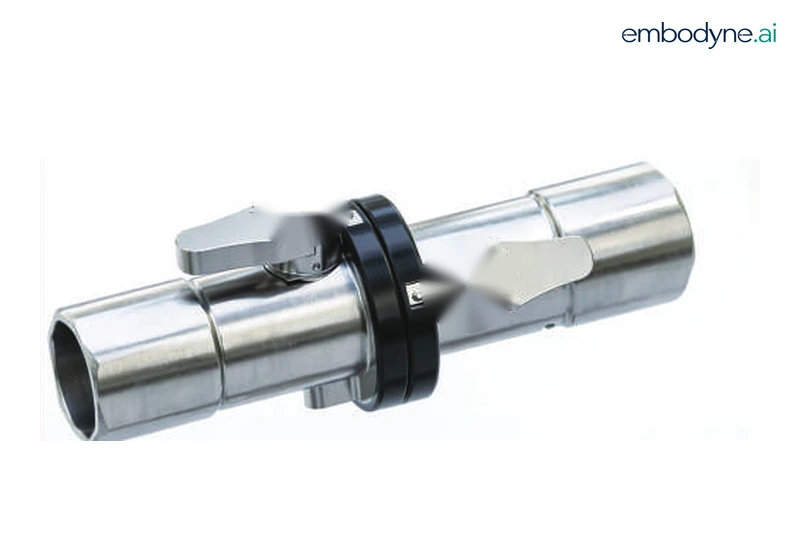
Interlocking Dry-Disconnect Ball-Valve Couplings
Full-flow dry-disconnect ball-valve couplings with identical mating halves and a mechanical safety interlock for coolant distribution.
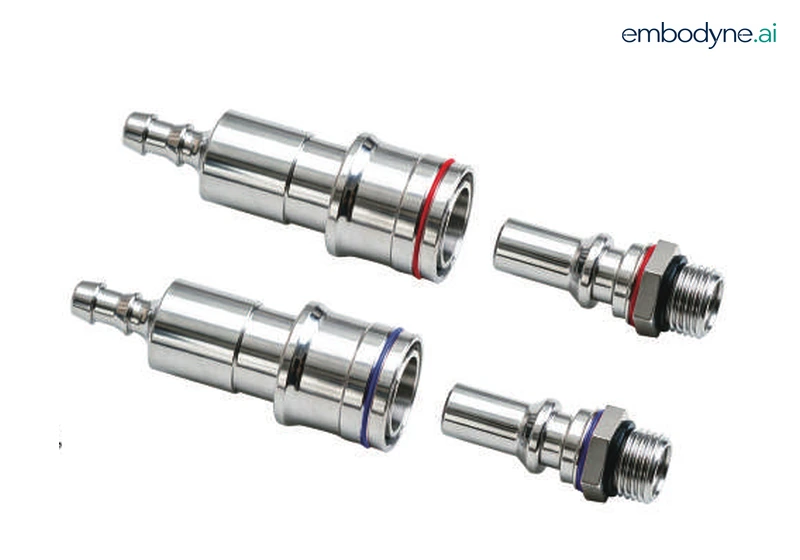
Manual Universal Quick-Disconnect Couplings
Manually operated UQD couplings for serviceable in-rack coolant connections, with four nominal sizes and separate connected and disconnected ratings.
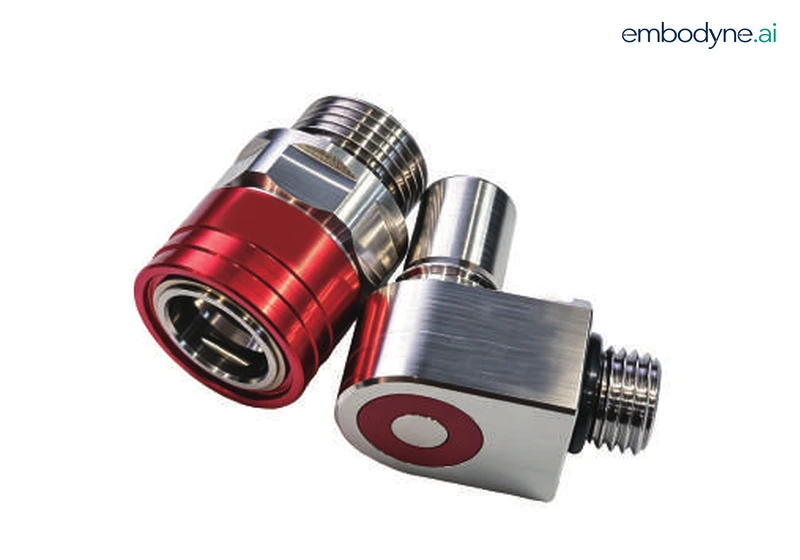
Compact Manual Quick-Disconnect Couplings
Compact MQD connectors for GPU-server coolant lines, with straight and 90° variants and separate size-specific hydraulic data.
Blind-mate couplings
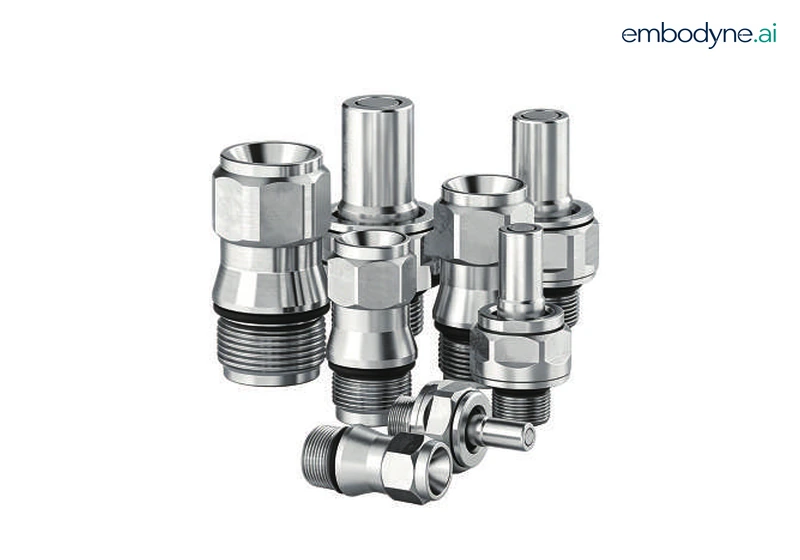
Blind-Mate Quick-Disconnect Couplings
UQDB blind-mate connectors for guided rack insertion, with size-specific pressure ratings and a stated radial compensation allowance.
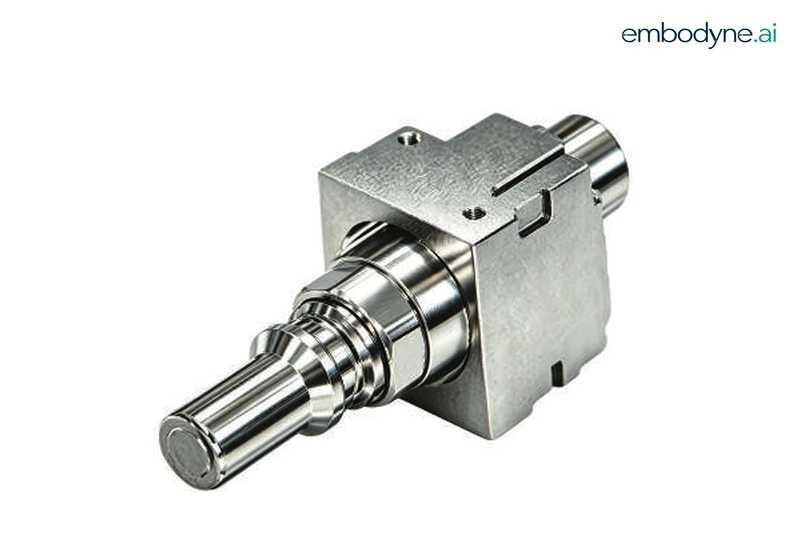
Self-Centering Blind-Mate Couplings
Floating blind-mate couplings for guided rack connections, with a 5 mm bore and configuration-specific alignment requirements.
Cooling hoses
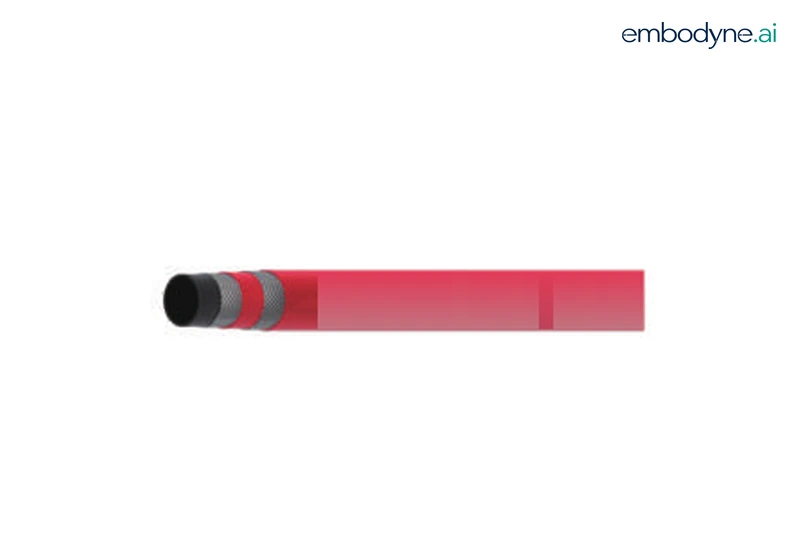
Textile-Reinforced EPDM Cooling Hose
Peroxide-cured EPDM coolant hose with two textile reinforcement layers and 6–51 mm bores.
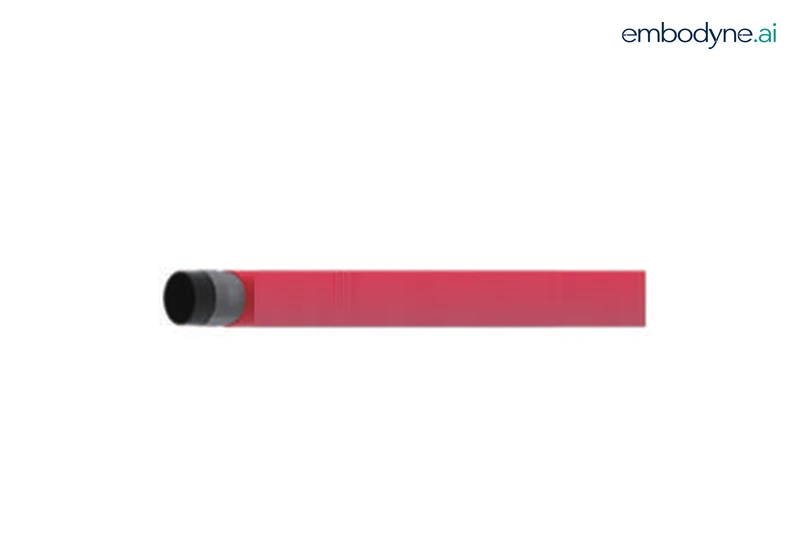
Compact Textile-Reinforced EPDM Cooling Hose
Reduced-outside-diameter EPDM coolant hose for dense routing, with seven sizes from 6 to 25.4 mm ID.
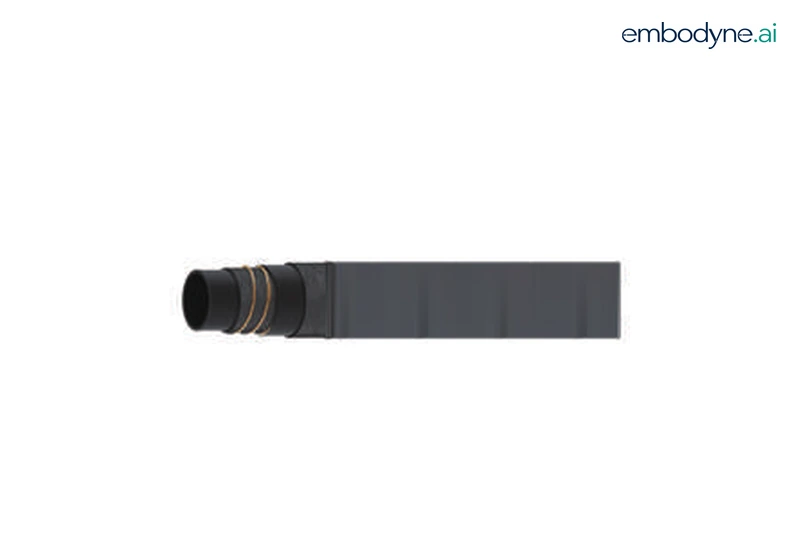
Anti-Static Copper-Wire EPDM Cooling Hose
Wrapped-cover EPDM cooling hose with textile reinforcement and anti-static copper-wire layers for applications requiring an explicitly reviewed electrical path.
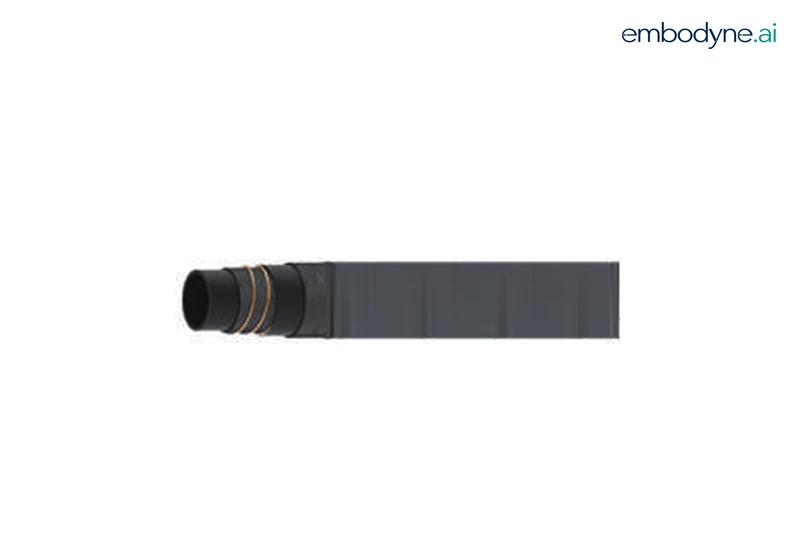
Steel-Helix Reinforced EPDM Cooling Hose
Large-bore EPDM coolant hose with two textile plies and one helical steel wire, in 1–4 inch sizes.
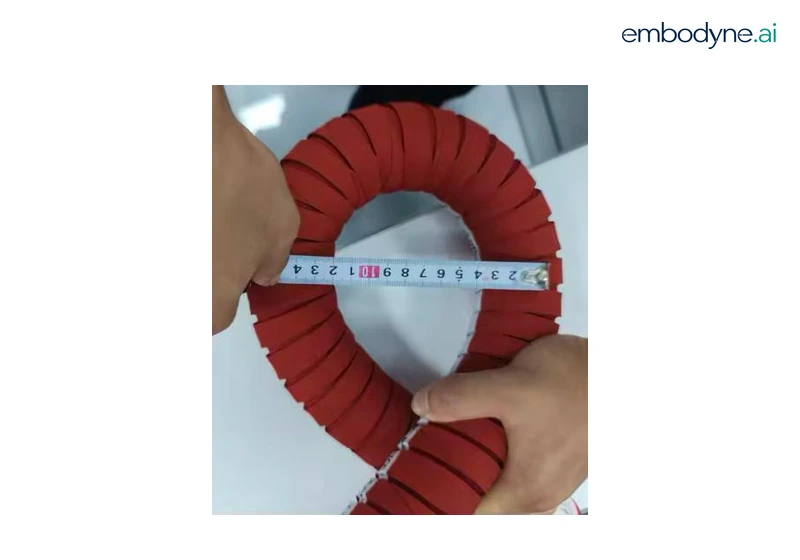
Corrugated Large-Bore EPDM Cooling Hose
Corrugated EPDM cooling hose with textile and steel-helix reinforcement, 1–4 inch bores and a 1:1 minimum bend-radius-to-ID ratio.
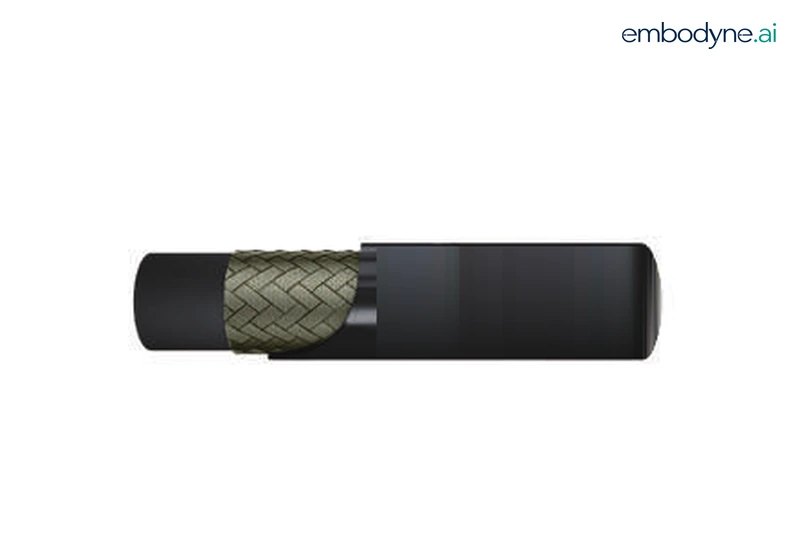
Technical overview
Choose the connection and hose as a system
A rack manifold connection, CDU hose assembly and GPU server coolant connection must be assessed together. Start with the coolant and operating envelope, then match shut-off behaviour, mating dimensions, bore, materials and routing space.
Selecting a safe operating envelope
Use each size's working pressure and bending limits, check the coolant and seals, and rate the completed assembly. Dry-break and low-spill designs still require the correct connection and maintenance procedure.
Specifications
| Family | Connection or routing role | Documented size coverage | Working pressure summary | Selection boundary |
|---|---|---|---|---|
| Mechanical interlocking ball valve | Manual full-flow isolation | 1 and 2 inch | 10 bar connected | Confirm seal, material and mating dimensions |
| Manual UQD | One-hand rack connection | 1/8 to 1/2 inch | 6.9–20 bar connected | Use each size's connected rating |
| Blind-mate UQDB | Guided rack insertion | 1/4 and 3/8 inch | 10–16 bar connected | Review radial compensation and guides |
| Self-centering blind mate | Floating rack interface | 5 mm | 2.4 bar | Confirm alignment against mounting drawing |
| Compact manual MQD | Dense server coolant line | 1/8, 3/16 and 1/4 inch | 6.9 bar connected | Confirm straight or right-angle geometry |
| Multipurpose push-on hose | Utility transfer; not dedicated EPDM | 6.3–25.4 mm ID | 1.4–2.4 MPa | Medium-specific temperatures apply |
| Textile-reinforced EPDM | General coolant routing | 6–51 mm ID | 16 bar | Use row-specific OD and bend radius |
| Compact textile EPDM | Reduced-OD coolant routing | 6–25.4 mm ID | 16 bar | Verify compact-OD fittings |
| Copper-wire EPDM | Electrical-path review required | 25.4–76.0 mm ID | 16 bar | No quantified resistance is supplied |
| Steel-helix EPDM | Large-bore coolant distribution | 25.4–101.6 mm ID | 10 bar | Use its larger bending radii |
| Corrugated EPDM | Compact large-bore routing | 25.4–101.6 mm ID | 10 bar | 1:1 bend-radius-to-ID rows only here |
- Comparison ranges are navigation aids, not ratings for every size. Read the individual connected/disconnected, medium, temperature and assembly qualifications before selection.
Typical applications
- Data-centre rack and manifold coolant connections
- GPU and AI server cooling loops
- CDU-to-manifold distribution and HPC infrastructure
- Industrial electronics and energy-storage thermal management, subject to application review
Technical selection
Define the complete operating envelope
Provide flow, coolant chemistry and concentration, minimum and maximum fluid temperatures, steady pressure, pressure transients, bore, ports, quantity and installation drawings. The lowest-rated component governs the assembled loop.
Check the exact mating interface
Provide the mating-half drawing or an existing mating half. Compare engagement geometry, shut-off sequence, sealing lands, port thread and tolerance stack; a family name alone does not establish interchangeability.
Verify coolant and seal compatibility
Review EPDM, FKM and all wetted materials against the actual glycol type, concentration, inhibitors, cleaning chemicals and temperature. Material names alone do not guarantee compatibility or lifetime.
Installation and handling
Installation guidance — not an additional rating
Isolate the loop, allow it to cool and follow the selected assembly's pressure-relief and connection procedure. Do not assume a coupling can be disconnected or connected against trapped pressure without a configuration-specific instruction.
Routing and mechanical support
Support hose and manifold loads independently. Avoid torsion, side loading, sharp edges and bends immediately behind a ferrule. Respect the selected hose's minimum bend radius and the connector's permitted misalignment.
Inspection and maintenance
Check seals, locking features, hose cover, fittings and signs of fluid loss before service. Flush and commission to the system's cleanliness and leak-test procedure; obtain the selected configuration's maintenance and replacement guidance.
Options and configurations
Configuration review
Choose the connector family, orientation, mating half, end fitting, hose construction, length and identification together. Send drawings and application conditions for a configuration-specific review.
Frequently asked questions
Which hose has the 1:1 minimum bend-radius relationship?
Only the corrugated large-bore EPDM construction has this relationship in every documented metric row. Textile, compact, copper-wire and steel-helix hoses have different row-specific bending limits.
Are multipurpose and EPDM cooling hoses the same?
No. They use different documented constructions and have different fluid and temperature qualifications. Keep them separate during material, cleanliness and fitting selection.
Does a family name establish interchangeability?
No. Confirm mating dimensions, materials, seals, tolerances, pressures and operating conditions for both halves. Generic UQD or blind-mate nomenclature is not evidence of universal compatibility.
Are these values guaranteed for every assembly?
No. Tables preserve the stated size-specific figures and qualifications. Ratings for a finished hose assembly, coolant mixture and temperature must be confirmed; a minimum burst pressure is not an allowable working pressure.
What is needed for a selection enquiry?
Send flow, coolant chemistry and concentration, operating temperatures, pressure and transients, bore, ports, mating interface, quantity and drawings. Include an existing mating half when interface identification is uncertain.
Product views. Final configuration may vary.
Send your connection requirements
Email the following so our engineers can review a suitable coupling or hose configuration:
- Flow rate and allowable pressure drop
- Coolant chemistry and glycol concentration
- Operating and ambient temperatures
- Operating pressure
- Bore or hose inner diameter
- Port and thread types
- Mating interface or existing coupling
- Quantity
- Drawings or rack and manifold layout